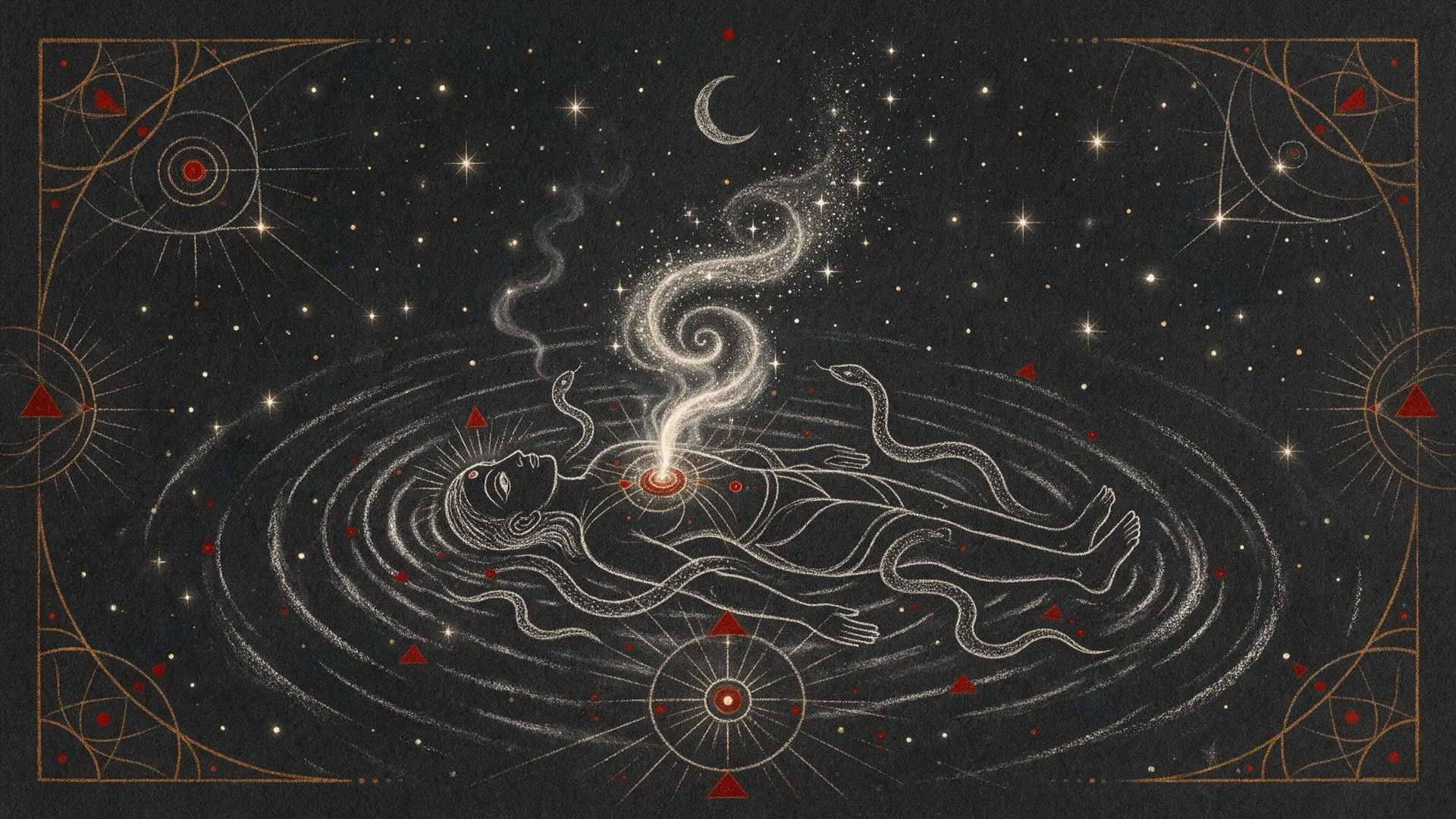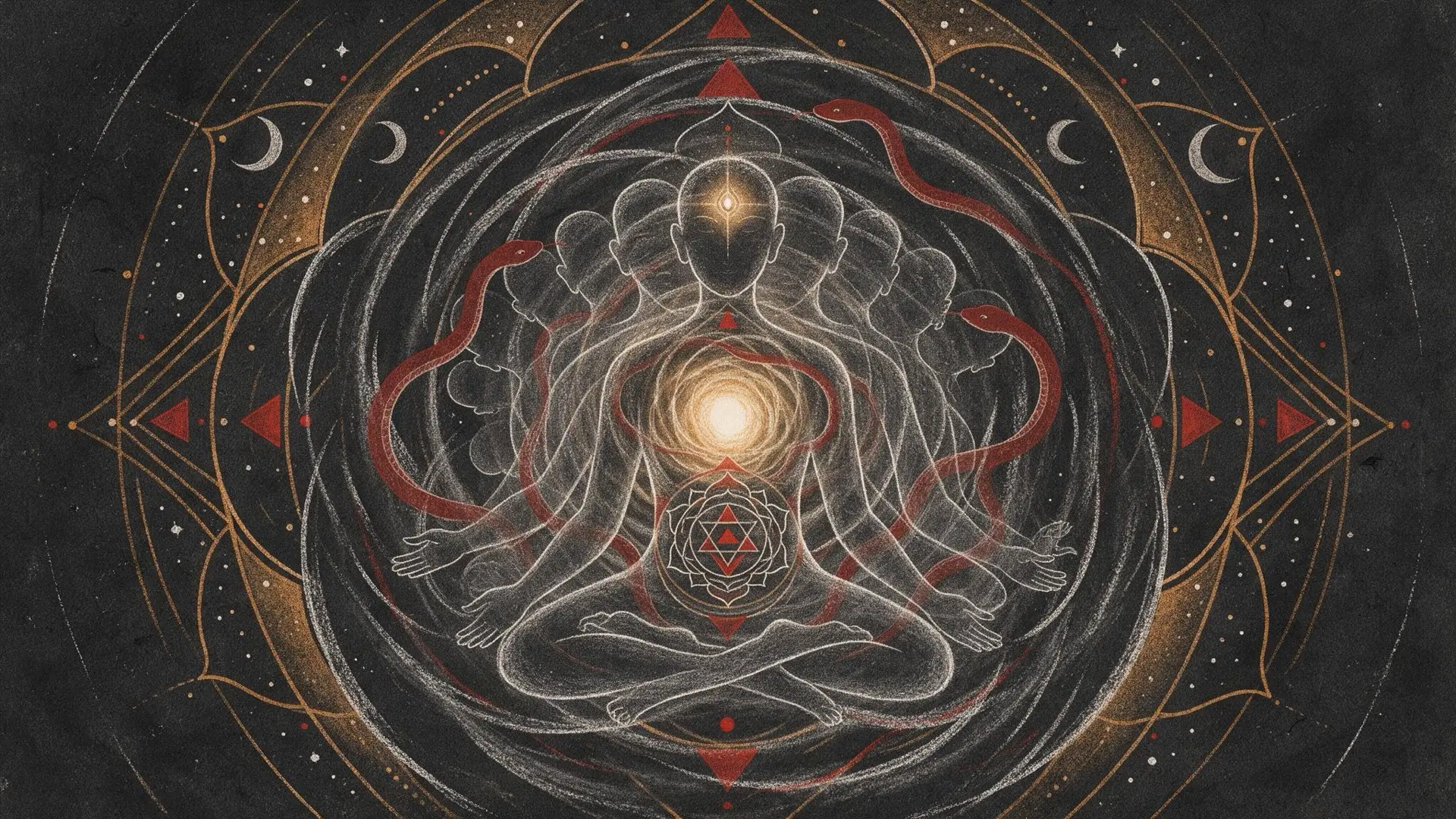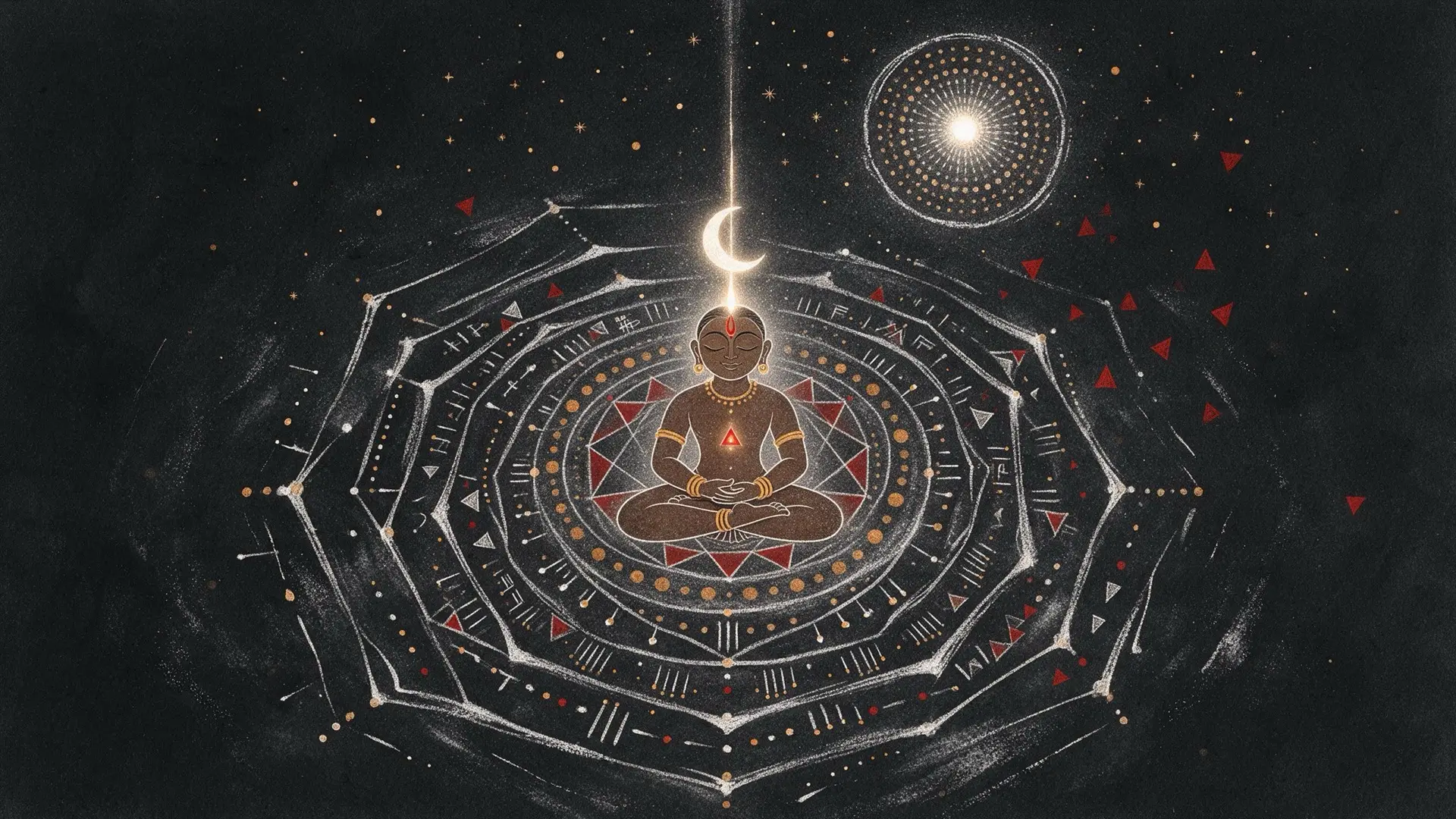
Trance is one of the oldest technologies for accessing states beyond ordinary awareness. Spiritual hypnosis uses it not to change behaviour, but to make direct contact with deeper dimensions of consciousness. What that means, how it works, and what to expect in a session.
Spiritual hypnosis is the deliberate use of trance states to access layers of experience that ordinary waking consciousness does not reach. It is not a therapeutic technique in the conventional sense. There is no suggestion, no scripted language designed to change habits, no attempt to install a new belief. The trance itself is the point.
Trance as a technology, not a treatment. Spiritual hypnosis is the deliberate use of trance states to access layers of experience that ordinary waking consciousness does not reach.
Trance is a naturally occurring state. It happens in the moments before sleep, in deep meditation, during breathwork, and in the presence of certain people or places. What spiritual hypnosis does is induce this state deliberately and then use it as a doorway. What lies beyond that doorway is not fixed. It depends on the person, the depth of the state, and the quality of the guide holding the space.
The category of altered states is not marginal. Neuroscience, contemplative traditions and clinical psychology all recognise that ordinary waking consciousness is one mode of many. Spiritual hypnosis is a method for moving between modes with intention and skill.
Clinical or therapeutic hypnosis uses the trance state as leverage. The practitioner guides the person into a relaxed, focused state and then delivers suggestions intended to resolve a symptom or change a pattern. Spiritual hypnosis treats the trance differently. The state is not a vehicle for intervention. It is an environment in which something can be directly encountered.
Uses trance to deliver suggestion. Goal is behaviour change or symptom relief. Practitioner is active, guiding through verbal instruction. Outcome is defined in advance.
Uses trance as a doorway to direct experience. Goal is expanded perception and inner contact. Practitioner holds space and supports what arises. Outcome is open.
Both use induction techniques to alter consciousness. Both require trust between practitioner and client. Both produce states the person would not reach alone without training.
If you are looking for symptom relief, clinical hypnotherapy is appropriate. If you are drawn to the direct experience of expanded states, spiritual hypnosis is the relevant approach.
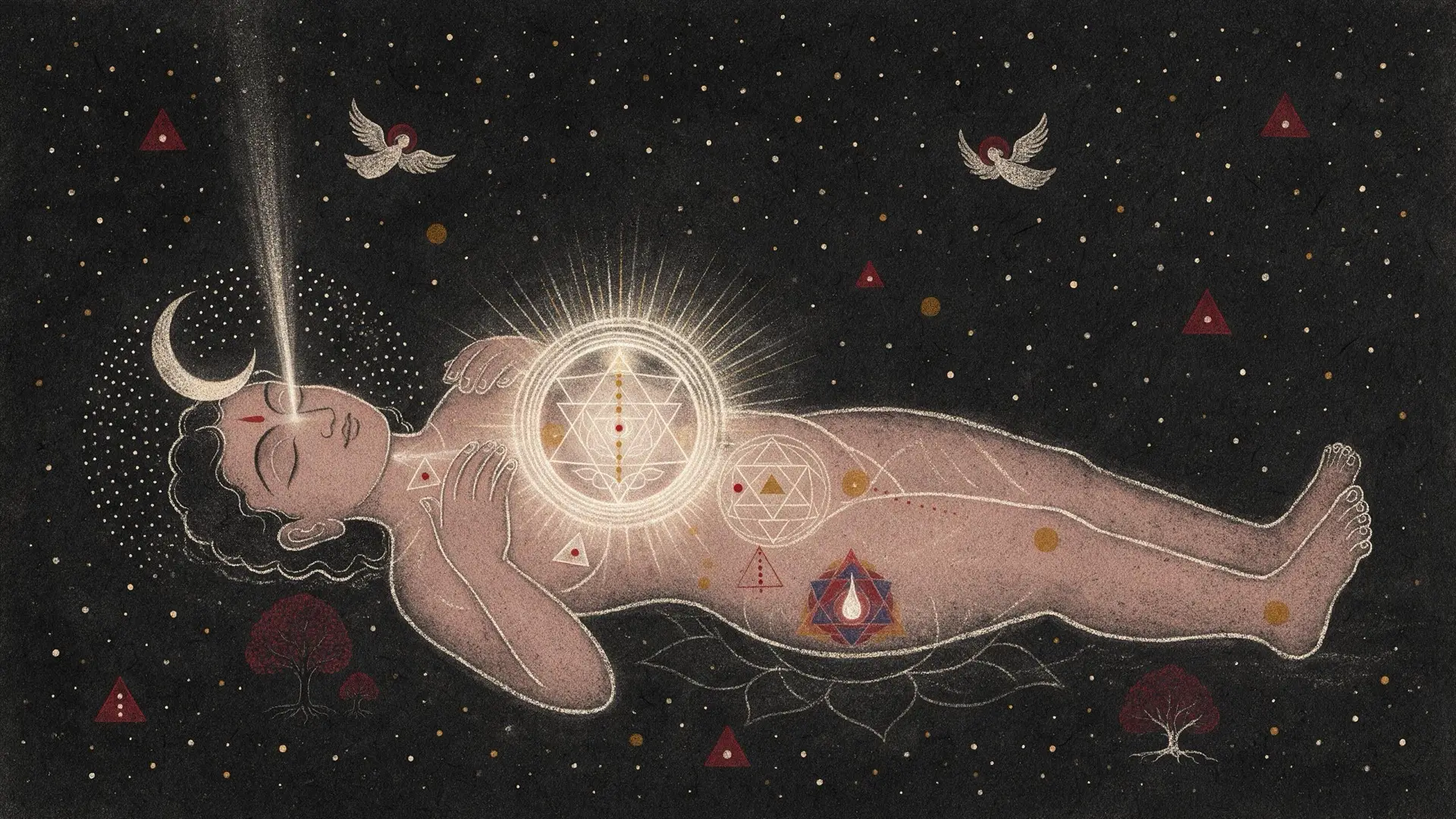
The trance state does something specific to perception. Ordinary filtering mechanisms that the nervous system uses to manage the constant flood of sensory and subtle information become quieter. What was filtered out becomes perceptible.
In deep trance, many people report sensing energy in and around the body for the first time. This is not a belief system. It is a perceptual event. The energetic body is accessible in altered states in ways it is not accessible in ordinary waking consciousness.
Some trance states produce a temporary dissolution of the felt boundary between self and world. This is described across traditions and is reported by people with no spiritual framework at all. It is a direct perceptual experience, not a metaphor or conclusion.
Material that is not available to ordinary introspection becomes accessible in trance. This includes emotional material that has been stored below the threshold of awareness, as well as what might be described as contact with a deeper intelligence than the analytical mind.
Spontaneous visual phenomena, knowing without knowing how, the sense of presence: these are consistent features of deep trance that occur across populations, regardless of prior belief. They are not induced by suggestion. They arise from the state itself.